
If your little one suddenly has blood in their ear canal, it would certainly cause alarm, especially if you don’t know what caused it. Blood in the ear can be caused by a variety of factors, so let’s go over some of these possible causes and what to do.
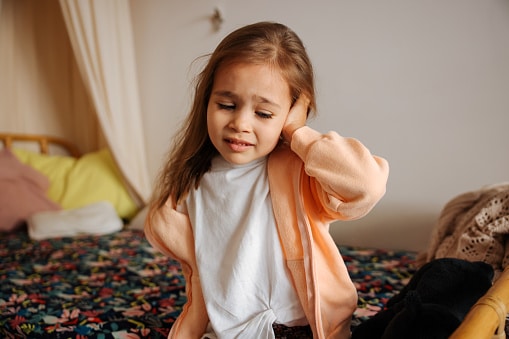
Causes of Ear Bleeding
To determine your plan of action, first try to identify what caused the bleeding. Here are some of the most common reasons a child might have blood coming out of their ear.
Object Stuck in Their Ear
Kids, particularly young kids, are inquisitive by nature and curious about their own bodies. As such, they’re prone to sticking things in places where things shouldn’t be stuck. Food, toys, their fingers and many other foreign objects may be lodged in their ears at any time, and because their ear canals are so small, they may get stuck.
Your child’s ear canal is lined with skin, and just like the skin on their knees and elbows, it can get scratched and bleed. A foreign object in their ear can easily break the skin. The blood from the scratch will leak out of the ear.
If the object is inserted far enough, it may also puncture the eardrum, creating a small tear in it and causing bleeding.
What to do: Do not try to remove the object yourself; you may inadvertently push the object further into the ear canal and cause further damage, including hearing loss. Instead, seek medical attention for your child so a professional can remove it safely.
Impacted Earwax
Similar to a foreign object, impacted earwax can cause blood in the ear by either puncturing the eardrum or irritating the skin lining the ear canal. Earwax is a naturally occurring substance that traps dust and debris before they reach the eardrum. Normally, it falls out of the ear on its own, but if it builds up, it can get compacted and obstruct the ear canal. Children are especially prone to impacted earwax because their ear canals are narrower.
What to do: Put the cotton swab down! Cleaning your ears with cotton swabs may actually make the impaction worse, as it pushes the ball of wax further into the ear (yes, even though you can see earwax on the cotton swab). Use earwax softening drops to loosen the wax and encourage it to fall out naturally. If this doesn’t work, seek medical attention for professional earwax removal.
Ear Infection
Middle ear infections, medically known as otitis media, are incredibly common in children; pediatricians treat 15 million cases of pediatric ear infections each year. These occur when fluid becomes trapped in the middle ear behind the eardrum, allowing viruses or bacteria to grow and multiply. Most often, ear infections are a complication of a viral infection, such as a cold or an upper respiratory infection.
If the fluid behind the eardrum builds up too much, it can lead to a ruptured eardrum, and the fluid—plus the blood from the torn eardrum—will burst out of the middle ear and drain from the ear canal.
What to do: While most ear infections resolve themselves within a few days, blood in the ear canal might indicate that the infection is growing more severe. See a doctor, and they may prescribe antibiotics to help the body fight the infection.
Head Injury
Injury or trauma to the head, such as from a fall or accident, can damage the delicate structures in the head, including the ears. If your child has had an injury lately and you notice blood leaking from the ear soon afterward, it could be a sign of severe injury, like internal bleeding.
What to do: Seek emergency medical attention. Head injuries are complex and can have wide-ranging effects on your child’s body.
If you need a specialist to look at your child’s ears, contact Blue Ridge ENT. We can help by prescribing antibiotics, inspecting how the eardrum is healing itself and discuss ear tubes if ear infections are a recurring issue for your child. Call Blue Ridge ENT for more information or if you have any more questions about blood in your child’s ear.