
It’s June, and the grass pollen is going bananas. Grass pollen is a common allergy trigger, meaning that many folks are dealing with terrible allergy symptoms right now. These symptoms may cause and be exacerbated by Eustachian tube dysfunction.
What Are the Eustachian Tubes?
There are two Eustachian (yoo-STAY-shun) tubes in your head: one on each side. They connect the middle ear to the back of the throat and are vital for equalizing pressure in and draining fluid from the middle ear. The middle ear is a pocket of air, so it’s highly sensitive to changes in air pressure. When pressure is unequal, the opening to the Eustachian tubes will pop open and equalize the air.
Eustachian Tube Dysfunction
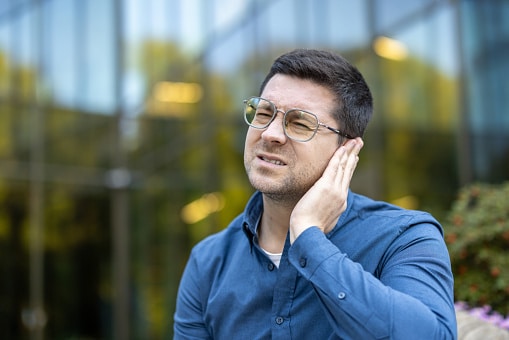
If the Eustachian tubes can’t pop open properly, it’s known as Eustachian tube dysfunction, or ETD. This often happens when the tubes are blocked due to inflammation. When this happens, fluid can build up in the middle ear, and air pressure can’t equalize. This could lead to symptoms such as:
- A feeling of fullness or pressure in the ear
- Ear discomfort or pain
- Tinnitus
- Ear infection
- Perforated eardrum
ETD is not a permanent condition; once the Eustachian tubes are no longer blocked, the condition will resolve.
How Are Allergies and ETD Related?
Allergies cause sinus inflammation, which can impede the Eustachian tubes, leading to ETD. Your immune system is attempting to catch and flush out the foreign invader, so it causes the blood vessels in the nose and sinuses to swell.
How to Find Relief
If allergies are causing ETD, you may find relief from ETD-related ear pressure and pain by managing your allergy symptoms. This could involve medications that address your symptoms or allergen immunotherapy to desensitize your body to your allergens and calm your body’s response to them. Call us to learn more!